
Rent vs. Own · Punta Gorda, FL
You're already
making the payment.
The only question is whose future it's funding.
Your rent check looks a lot like a mortgage payment.
In some cases, it is bigger than one.
Rents across Charlotte County have climbed to the point where many tenants are writing checks in the same range as a mortgage — and collecting exactly zero equity for it. You've already proven you can make a large, reliable payment every single month. That discipline is the entire skill of homeownership. The only thing a mortgage changes is the beneficiary. Right now, every check builds your landlord's balance sheet. It doesn't have to.
The Payment
You're already paying
ownership money.
Your monthly number doesn't have to go up when you own — in some cases, it goes down. That's the part most people don't expect.
What keeps most renters renting isn't the payment. It's the cash you need before the first payment is ever made — the down payment, the closing costs, the upfront amount standing between you and the keys. The payment is already in your budget. The real question is what's actually in your way.
The Upfront
"But I don't have
the cash to get started."
Here's the part that actually stops most renters — and it's usually not the monthly payment. It's the cash you need just to get to the closing table. Down payment, closing costs, prepaid items — on a conventional loan, that can add up to $10,000–$15,000 out of pocket. For a lot of people, that number ends the conversation before it starts.
Except there are programs built for exactly this gap.
Down Payment
Florida has programs that cover 3–5% of the purchase price — which on a $219,000 home takes care of the down payment entirely, with nothing out of your pocket for that piece.
Closing Costs
Many of these programs don't stop at the down payment. An extra $4,000–$7,000 toward closing costs is common — which takes care of most of the rest of what stands between you and the keys.
If the only thing standing between you and owning is the upfront cash, that's not a dead end. It's a paperwork problem — and paperwork problems have solutions. Our buyer programs page walks through exactly what's available.
The Gap
There's still a real
entry point — for now.
The median home here runs around $450K. That number tells you Punta Gorda is already a serious market. But there's a second number hiding underneath — and it's the one that matters to renters right now.
Price Comparison
City Median
$450K
Charlotte County · resale market
New Construction
$219K
Affordable Home Builders · Punta Gorda
A $231,000 gap. The entry point is still open.
Brand-new homes, priced well below the city's own middle, in a town whose middle keeps rising. In most desirable coastal markets, this window closed years ago. The people who got through it look like geniuses now. They weren't geniuses. They were just early. Gaps like this don't announce their closing date. They just close.
The Asset
Where you live matters
as much as what you buy.
If you've driven around Southwest Florida, you know the difference. There are areas that look affordable on paper but feel rough the moment you're there — places you drive through, not places you picture your life.
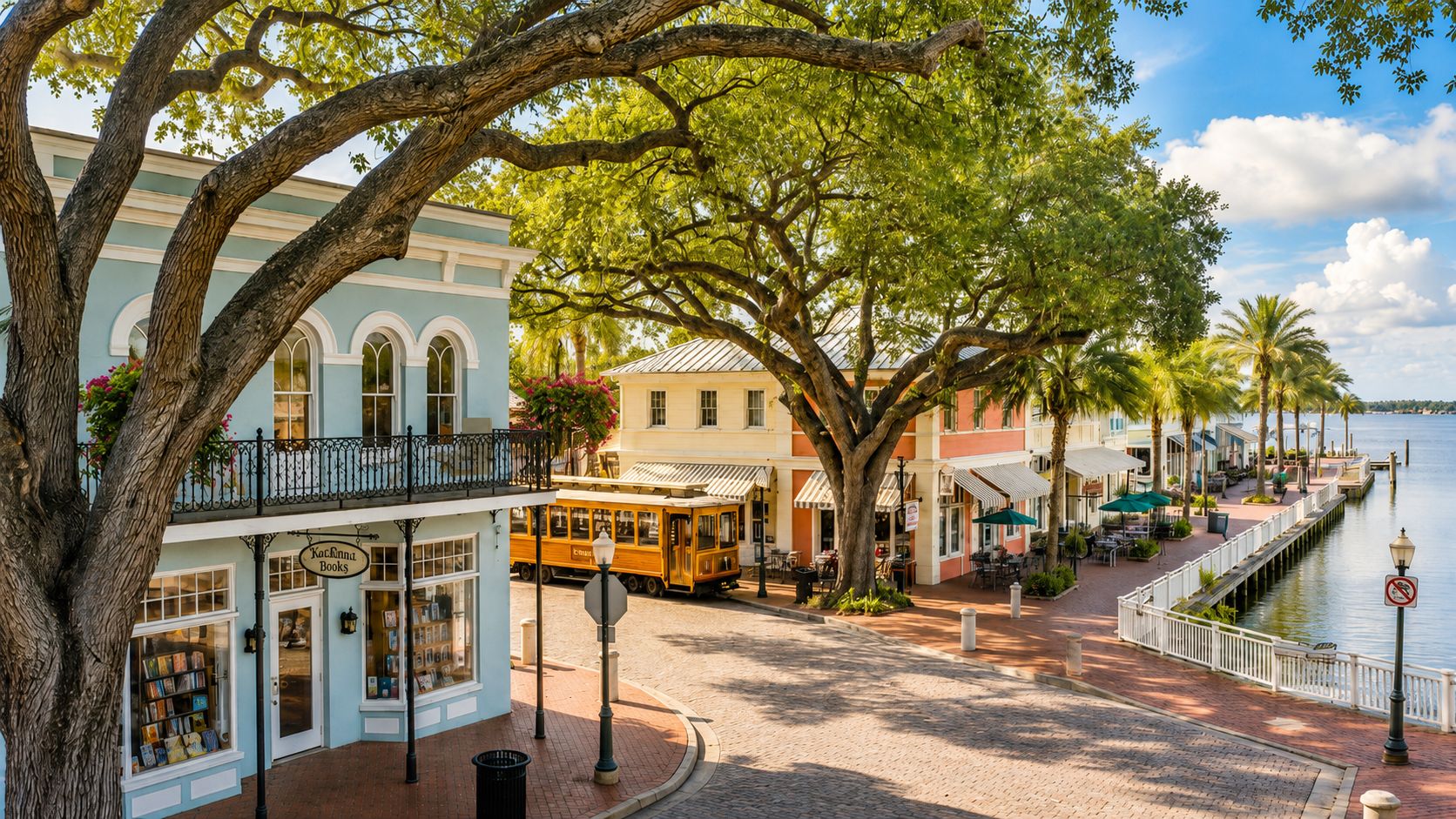
Punta Gorda just reads differently. The streets are looked after. People actually walk and bike here. The town has a real identity — the harbor, the parks, the downtown grid — instead of being just another exit off the interstate.
Square footage exists everywhere.
A town like this doesn't.
That's not a small thing when you're deciding to buy. When you own here, your equity is attached to a place people genuinely want to be. And "a place people want to be" is exactly what holds value over time.
The Math
Zone X and new construction
keep the numbers clean.
Everybody thinking about buying in Florida has the same two worries: storms and insurance. Fair. Here's what makes both conversations simpler with these homes.
New Construction
Your roof is brand new. Your systems have never been patched. Your windows and doors were built for today's codes and today's storms — not the optimism of 1987. Impact glass, CBS block construction, R-30 ceiling insulation — that's not a feature list, that's just what the house is. You start at "normal maintenance," not "inherited surprises." No HOA, either.
FEMA Zone X
In plain English: this is a lower-risk flood zone, and most lenders don't require a separate flood insurance policy here the way they do in higher-risk zones. It doesn't make risk disappear — nothing does — but it keeps your monthly number cleaner and your closing simpler. If you want flood coverage for peace of mind, you can add it. The point is it's your choice, not a requirement standing between you and the keys.
First-time buyers don't need a guarantee. They need a number they can trust.
The Town
This town is not
waiting for permission.
You live here, so you've seen it yourself. Punta Gorda keeps getting a little nicer, a little busier, a little more "discovered" every year.
More people are choosing this town on purpose — not landing here by accident, but comparing it to everywhere else on the coast and picking it. The downtown and harborfront keep improving.
One of the last harbor towns
that still makes sense.
Now, nobody can promise you what home prices will do — anyone who guarantees that is selling you something. But when more people want to live somewhere, and the town keeps investing in itself, it's reasonable to expect prices and rents to keep drifting the direction they've been going. Which is up.
Here's what buying does lock in: today's version of Punta Gorda, at today's price. Keep renting, and you're signing up to pay for tomorrow's version — at whatever tomorrow charges.
The Timeline
Run both versions
of the next seven years.
Most homeowners don't stay forever — the average is around seven years before life reshuffles. So run the math both ways.
You keep renting.
The town keeps polishing itself. The "hidden gem" articles keep getting written. Rents follow the reputation upward.
At the end, you've spent a small fortune living in a town that got better every year — and every dollar of that improvement landed in someone else's equity.
You watched the trajectory.
You buy.
Same town, same seven years, same trajectory. Except now your monthly payment has been building your position the entire time.
When life reshuffles, you're not handing back keys — you're holding an asset in a market that spent seven years becoming more desirable.
You owned the trajectory.
Nobody can promise you the second story's ending. But the first story's ending is already written, and you've read it before.
The Bottom Line
So what's
the honest answer?
This isn't about pretending Punta Gorda is cheap, or that buying is risk-free. Neither is true, and the $450K median makes that clear. It comes down to four things that are all true at once.
-
You're already paying real money to live here.
-
The upfront cash barrier is smaller than you think — and in some cases, covered.
-
The town is clearly headed toward more desirable, not less.
-
There's still a gap between entry-level new construction and where this market is heading.
If you like living here, you plan to stay a while, and your rent already looks like a house payment — then buying isn't some big risky leap. It's a smaller step than it feels like. You're just putting your name on the spot you're already paying for.
The rent is due either way. The only real question is whose equity it builds.
Next Step
Come see what we're building.
Specific homes, real prices, exact locations. Stop imagining the move. See what it actually costs.
See the House Models →Have questions?
Get clear answers on pricing, timing, credit, and your best next step.
239 789 6220 Punta Gorda, FL