
The Case for Punta Gorda: A Harbor Town That Still Does the Math
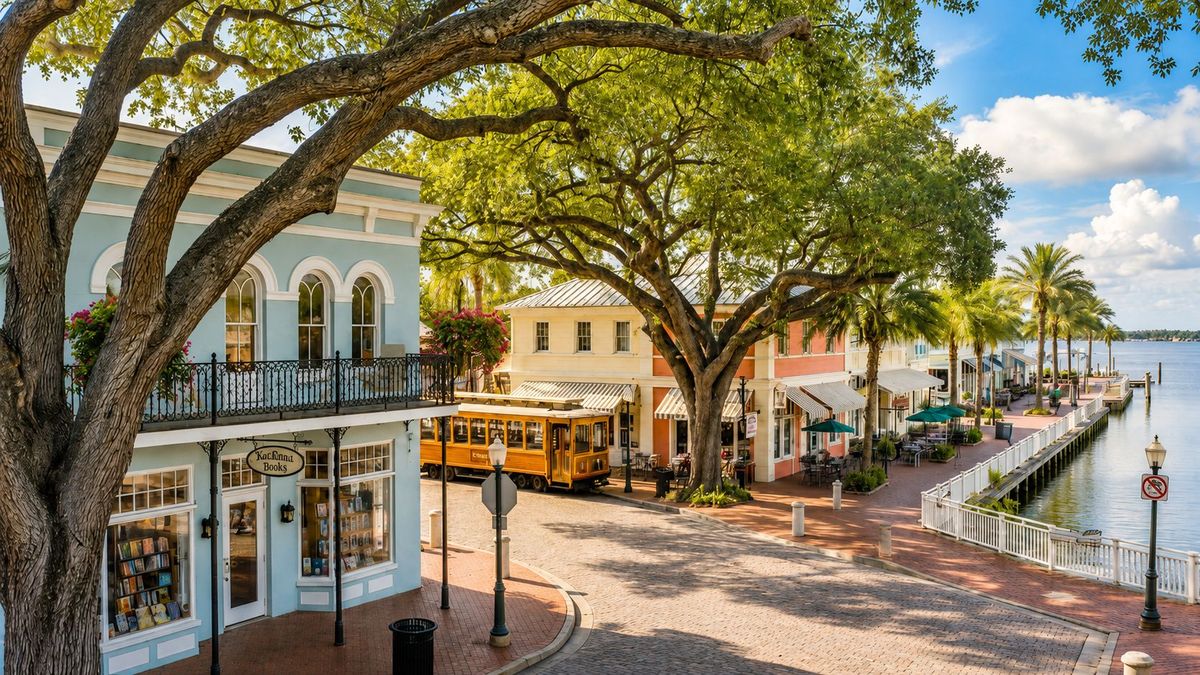
There's a moment on Marion Avenue, late afternoon, when the light comes off Charlotte Harbor and turns the whole street gold. Boats swing on their moorings. Somebody's walking a dog past a storefront that's been a storefront for a hundred years. And you catch yourself thinking the thing every Florida town wants you to think and almost none of them earn:
I could live here.
That thought is the whole investment thesis. Everything else is arithmetic.
The Honest Number First
Let's not pretend. The median home in Punta Gorda runs in the mid-$400Ks. This is coastal Florida — nothing on the water is a bargain anymore, and anyone telling you otherwise is selling something.
But here's what the median doesn't tell you: what you get for it. Drive this coast and you'll notice the price of a place and the feel of a place stopped speaking to each other years ago. There are towns where you pay Naples-adjacent money for a view of a parking garage. There are towns where the price is low and ten minutes behind the wheel tells you exactly why.
Punta Gorda is one of the last spots on the Gulf where the number and the feeling still match. That's rarer than a good school district and harder to build than a marina.
Nobody Ends Up Here by Accident
Some Florida towns are where people land. Punta Gorda is where people aim.
The couples who picked it over Sarasota. The remote workers who ran the numbers on Naples and laughed. The families who wanted water without wanting chaos. They all did the same tour of the coast, saw the same things, and chose this specific harbor on purpose.
And what were they choosing? Streets that someone clearly cares about. A downtown grid you can actually walk — real blocks, real corners, not a "town center" bolted onto a highway. Quiet that doesn't feel abandoned. You don't have to squint here, and you don't have to edit the view. Plenty of Southwest Florida asks you to ignore the tired strip corridor to appreciate the sunset. Punta Gorda doesn't make you do that work.
That's not a lifestyle bonus sitting next to the investment case. It *is* the investment case. Demand follows the places people genuinely want to be, and it stays there.
The Gap Between Naples and Nowhere
The Gulf Coast has sorted itself into a barbell. On one end: Naples and Sarasota, magnificent and priced like it, where a normal budget isn't a down payment, it's a rounding error. On the other end: the in-between towns, which usually offer one of two deals —
- The cheap deal: lower prices, and the trade-offs are visible from the driver's seat.
- The shiny deal: new gated everything, an amenity list as long as your arm, and a stack of monthly fees quietly doing pushups behind the HOA brochure.
Punta Gorda skipped the barbell. A real harbor. A real downtown. Neighborhoods that look lived-in instead of staged. A price that respects the setting without requiring generational wealth to participate.
Not cheap Florida. *Correct* Florida.
A Market With a Pulse, Not a Fever
Boom towns are exciting right up until they aren't. Punta Gorda has never really done fever — its chart looks less like a roller coaster and more like a stubborn, unglamorous staircase. Up, hold. Up, hold.
Three reasons why:
The buyers plan to stay. Retirees, remote workers, families — people who unpack all the boxes. Speculators need churn; this town doesn't produce much of it.
The town said no to the skyline. Height and growth restrictions kept the harbor a harbor instead of a canyon of condo towers. What you're buying today is recognizably what you'll own in fifteen years.
The appeal isn't a trend. Nobody's TikTok made Punta Gorda happen. Water, light, order, and walkability were a good idea in 1926 and they'll be a good idea in 2056.
No market is risk-free. But there's a difference between betting a town becomes something and betting a town *stays* something. The second bet has better odds.
Old Bones vs. New Bones
Most older housing along the Gulf comes with a biography: which storms it survived, which repairs were done right, which systems are running on borrowed time. Sometimes that biography is charming. Sometimes it's a filing cabinet of "we'll deal with it later" that becomes *your* later at closing.
New construction rewrites the opening chapter. The roof's age is zero. The windows and doors were engineered for today's codes and today's weather, not 1987's optimism. Your maintenance calendar starts at "normal wear," not "archaeology."
And then there's the map. These homes sit in **FEMA Zone X** — the designation that means most lenders won't require a separate flood insurance policy the way they do in higher-risk zones. That's not a footnote. That's a lighter monthly payment, a simpler closing, and one less renewal letter to dread every year. Want coverage anyway? Add it on your terms. The point is nobody's forcing the second policy just to hand you the keys.
Two Hundred and Change, in a $450K Town
Here's where it gets interesting.
Against a mid-$400Ks median, a $219K new-construction home — like The Sparrow — isn't a typo. It's a first-time buyer's actual path into a market that otherwise reads as closed. Step up to around $260K and layouts like The Egret buy real square footage in the same lane: not entry-level in the apologetic sense, not luxury in the performative sense. Just solid, for people who live and work here.
Below the town's middle. Above the region's rough edges. New bones, dry zone, walkable harbor town wrapped around it.
That sliver of the map — under the median, over the compromises — is where the opportunity actually lives. Most markets don't have that sliver anymore. This one still does, and slivers close.
Three Questions, One Town
Strip away the brochure language and every real estate decision comes down to the same gut checks:
- Would I drive these streets at night without thinking about it? - Does this town still make sense if the headlines turn? - Is the number honest about what I'm getting?
Plenty of places pass one. Some pass two. In Punta Gorda — especially in that $200K–$260K new-construction window — you can get to three yeses without squinting, rationalizing, or pretending the rest of coastal Florida is affordable.
You're not buying perfection. Nobody's selling that, here or anywhere. You're buying a specific alignment that's getting harder to find on this coast every year: a place worth wanting, a house without a past, and a price that is a find.